

The soldier Roman received a bionic prosthetic arm
Roman, who served in the Third Army Corps and recently left military service, received a modern bionic prosthesis after sustaining severe injuries that resulted in the amputation of his arm.
Roman was at home when Russia launched its full-scale invasion of Ukraine. During the first days, he followed the news and watched as people lined up at gas stations. But he did not stay on the sidelines for long. On March 16, 2022, he voluntarily reported to a military recruitment center and said he was ready to join the Armed Forces of Ukraine.
One of his main motivations was his brother, who was already serving in the military and defending Ukraine.
“My brother was fighting. So I got myself together and went. That’s how my military career began,” Roman recalls.
He says one of the key strengths of his unit was its experienced commanders, many of whom had firsthand combat experience, as well as the continuous training of its personnel. Training did not stop even after soldiers returned from their positions. They continued to work on both theoretical knowledge and practical skills, repeatedly practicing their actions until they became automatic.
Roman sustained his first serious injury in February 2024 during the defense of Avdiivka. A Russian 82 mm mortar round struck the building where Ukrainian soldiers were stationed. Roman suffered injuries to his left arm, chest, leg, and neck.
Later, he sustained another severe injury, which ultimately resulted in the amputation of his arm.
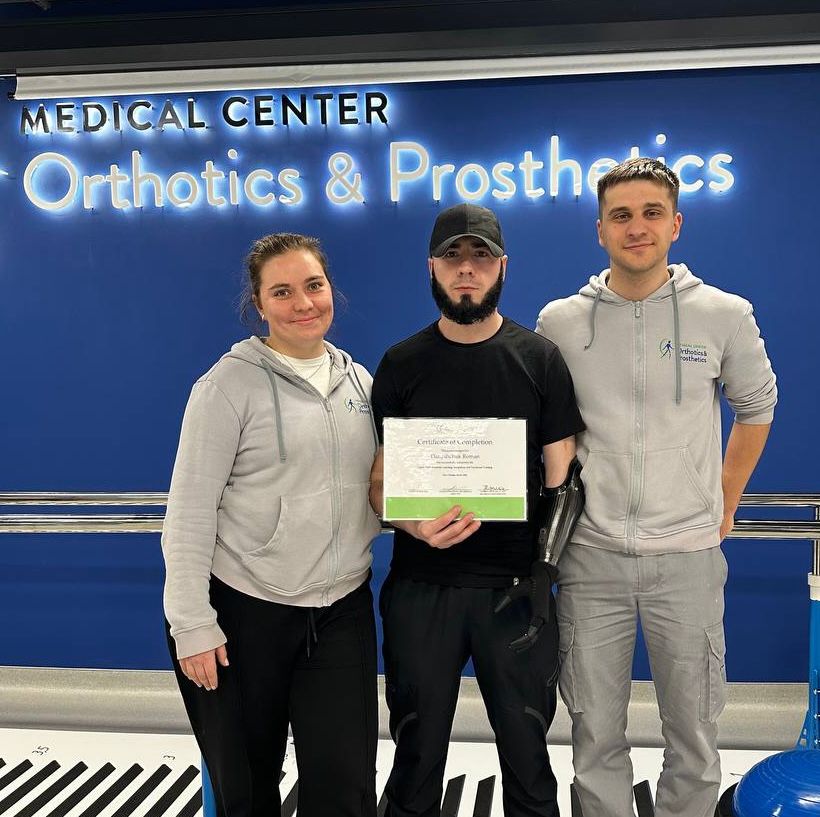
After treatment, Roman began a new stage of his recovery: prosthetic rehabilitation and adapting to life after the injury. With the support of the Techiia Foundation, he received a modern bionic prosthesis that helps him perform everyday tasks and gradually return to his usual routine.
An important part of his rehabilitation involved exercises designed to develop both fine and gross motor skills. Roman learned to use different types of grips, pick up and hold objects, and perform everyday movements. Gradually, tasks that initially required considerable effort and concentration began to feel more natural.
“I really like the prosthesis itself. It helps me in many ways, and I already use it actively. Things have become easier, and I don’t feel the difference as strongly because I’ve lost a limb,” Roman says.
Roman plans to use the bionic prosthesis for everyday and less demanding tasks, while relying on a mechanical prosthesis for work in more challenging conditions. He says it is important not to expect immediate results: adapting to a prosthesis takes time, patience, and constant practice.
That is also his advice to other defenders who are preparing for prosthetic rehabilitation.
“Not everything will work right away, and it will be difficult. You need to calm down and keep working — try again and again, build muscle memory. From my own experience, I can say that you can learn anything,” Roman emphasizes.
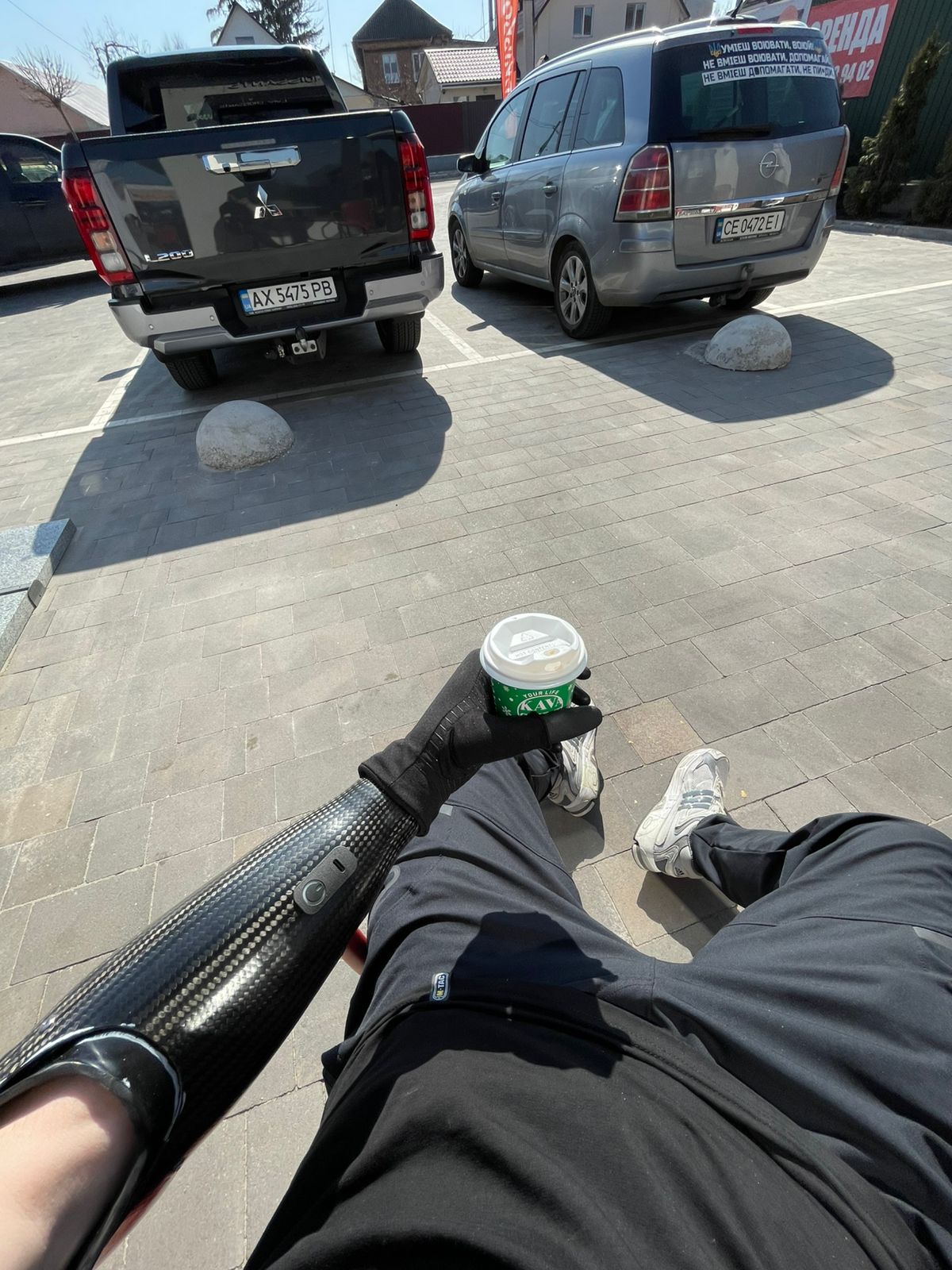
His journey after the injury is one of daily work, gradually rebuilding skills, and regaining independence. For Roman, the modern prosthesis has become one of the tools helping him confidently manage everyday life again and build a new chapter after military service.